

You’ll be surprised at how easy it is to make burritos at home. With the hopes that you’ll rarely buy frozen burritos again, I’ve put together this recipe with several variants.
There’s one where we make flour tortillas from scratch, and I propose several fillings to keep with the tradition. Which tradition? The one where you add whatever’s available and makes sense while you’re hungry and pressed for time, or putting together a quick bite for a group. That’s probably how the concept of the burrito started in the first place, and the beauty of it is that it should be easy to make. Grab some meat, rice, beans, and nice pico de gallo, put it all within a flour tortilla, wrap it up, and voilà; or everyone can make their own.
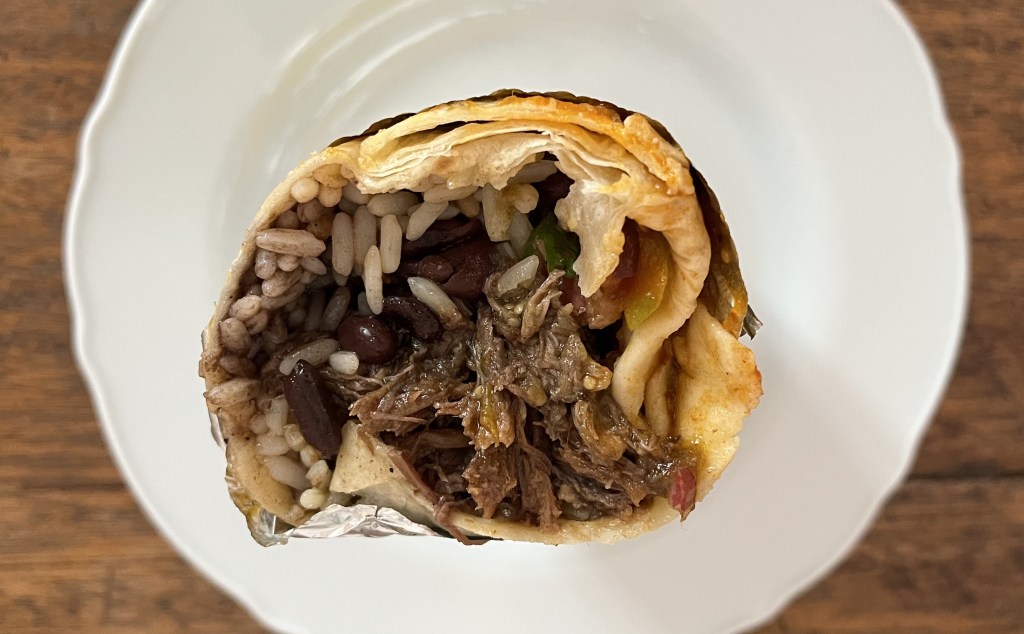
In this recipe, I want to share with you one of the more typical burritos, on this side of the border— shredded beef with chilacas and tomatoes, refried black beans with a little lard, a standard guacamole, some hot chile de árbol salsa to spice things up, and some cotija cheese to finish it all off.
In my estimation, this burrito has got it all. This being a recipe written in México, we are putting some extra care into it. I’ll also share a Tex-Mex version of it below, and a brief history of the burrito.
For now, to get cooking, you’ll only need to assemble:
- Iron griddle or flat pan
- Scale
- Oven tray
The ingredients, you’ll find at the side of each element:
Instructions
Wheat Tortillas (12 units)
- 600 g Wheat flour
- 360 g tepid water
- 10 g salt
- 4 g baking powder
- 120 g vegetable oil
Sift wheat flour and baking powder. Add salt, tepid water and vegetable oil. Bring all the ingredients together to form a soft ball.
Knead this dough ball for about 10 minutes, or until the gluten is properly developed. How do you know if it’s developed? It’s the stage when you should be able to take a ping-pong-sized ball of dough, and gently stretch it until it is translucent. When this point is achieved, leave the dough in a bowl, cover with plastic and let rest for 1 hour.
Afterwards, divide the dough in 12 (90g each) portions. Give them a round, smooth shape and let rest, covered with cloth or plastic, for 5 minutes. Stretch with a rolling pin as thin as possible to a reasonably round shape. Cook on a hot griddle or sauté pan for 20 to 30 seconds and flip to cook the other side for another 20-30 seconds. Wrap in a plastic bag and let cool. This keeps them malleable for when we wrap the burritos later.
Shredded Beef
- 1 kg beef brisket
- 1/2 onion
- 2 garlic cloves
- 2 fresh coriander branches
Place the beef brisket, onion, garlic cloves, cilantro branches and a little salt in a pot. Cover with water, bring to a boil and cook in medium heat for 1 hour. Let cool for a while and then shred the meat.
Heat a little oil in a large sauté pan or medium sized pot. Add the strips of chilaca or poblano chilies. Cook in medium heat for 3 minutes. Add the finely chopped onion and keep cooking for 2 more minutes. Add the small-diced tomato and cook for another 5 minutes. Add the shredded meat, heat thoroughly and season to taste with salt and a little cumin.
Refried Beans
- 400 g cooked pinto, bayo, or black beans, with a little of their cooking water
- 1 tomato
- 1 serrano chili
- 1 garlic clove
- 1/4 onion
- 30 g pork lard (optional)
Purée the beans in a blender with the tomato, serrano chilli (remove seeds to reduce hotness) onion and garlic. Add a little of the beans cooking water to help the blender process everything smoothly.
Heat a little olive oil or lard if using, add the puréed beans, bring to a boil and cook in low heat for 5 minutes. Season to taste with salt.
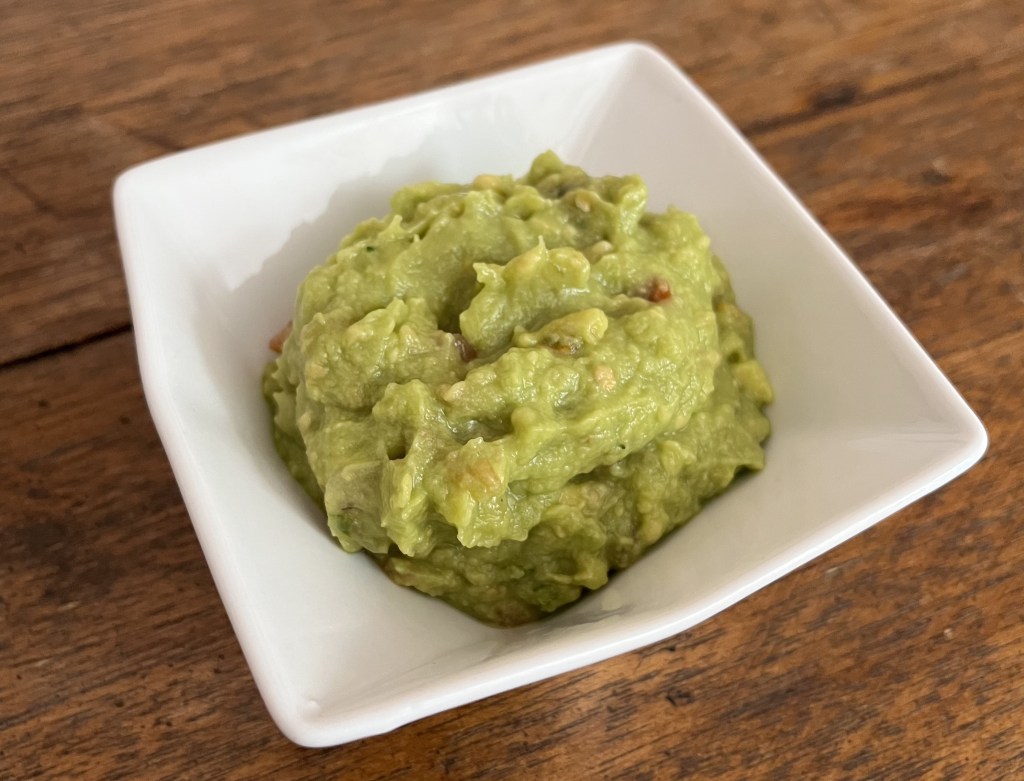
Guacamole
- 4 avocados
- 2 diced tomatoes
- 1/4 finely chopped onion
- 2 tbs finely chopped fresh cilantro
- 1 finely chopped serrano chili
- 1 lime
Cut the avocados in half. Spoon out all of the pulp and crush with a fork until smooth. Add diced tomatoes, finely chopped onion, cilantro and the serrano chilli (remove seeds to reduce hotness). Seaon with salt and lime juice to taste.
Add 1 avocado pit (it slows oxidation), cover and keep in refrigeration.
Chile de árbol salsa
- 300 g tomatillos (green tomatoes)
- 1 tomato
- 4-8 arbol chilies
- 1/4 onion
- 2 garlic cloves
- 30 fresh cilantro leaves
- 1 pinch dried oregano
Place the tomatillos, tomato, árbol chillies, onion and garlic cloves in a pot. Cover with water and bring to a boil. Let stand por 10 minutes. Blend with the cilantro leaves to your desired consistency. I prefer to leave it a little rustic, not fully blended. Season to taste with salt and a little dried oregano.
Recipe Notes
How to Wrap a Burrito
Heat a griddle or sauté pan, heat up wheat tortillas and place on a chopping board. Then, spread refried beans, guacamole, and a portion of shredded meat, sprinkle shredded cheese, and a little chile de árbol salsa. Roll into a burrito, first laterally and then vertically, or use this video, and then wrap the whole baby in aluminum foil.
I prefer wrapping it in foil because that way there are way less chances of the whole thing falling apart while you’re eating it. There’s a reason they serve it like that in any Mexican restaurant, instead of cutting it in half like you see in so many online recipes. When you eat it, just remove a little of the aluminum foil before every bite, and you’ll ensure a good structure and temperature all throughout. It’s also easier to save for later in case you don’t finish it!

Other considerations
As usual on this website, we’re doing everything for this recipe. But of course, you can buy some of the elements ready-made. The tortillas are the obvious choice, and would save you a considerable amount of time. Homemade tortillas can be tricky to make, but they are fun, and probably better for you than the industrial stuff. Also more impressive if you’re cooking for guests.
Tex-Mex, Breakfast, and Veggie Burritos?
You can also substitute the protein on this burrito. Pork works well for a tex-mex version and you can add some pico de gallo. Scrambled eggs take less time to cook and, keeping everything else constant, you’ve got the breakfast version. You can also try a veggie version: simply sauté strips of carrot, celery, potato, cabbage, season with salt, pepper, and maybe some dried chili seeds.

How Spicy Should a Burrito be?
That’s entirely up to the person enjoying it! As always with hotness, take care when handling hot chilies. When cleaning them to make the sauce, remove seeds completely to reduce hotness to a minimum. Leave a few for medium-hotness, or leave most of them if you really fear nothing.
A Brief History of the Burrito
Burritos are one of the staples of Mexican cuisine, and probably the best-known dish of the northern part of the country. Northern México is mostly an arid, hard place. That’s why hardly any civilizations flourished there, unlike central and southern Mexico where civilizations have flourished and decayed for millennia. Crops like corn, chilies, and beans have been grown and eaten there in abundance for centuries. But as we go up to northern México, corn especially was not so abundant or easy to grow. That’s why European-brought wheat was more adopted in these regions. That is why wheat tortillas are more common than corn tortillas in Northern Mexico. To Mexicans from the center and south of the country, it can always be a bit of a shock at first. Those norteños make their tacos with flour tortillas!
According to linguists, “burrito”, which means “little donkey”, used to be another name for any taco, but it never caught on as much as “taco” and instead became the way to refer to this other ‘taco-like’ meal that eventually became another thing entirely.
Essentially, a burrito is a wheat tortilla wrap; a savory and filling lunch, easy to transport and eat. There’s no clear documentation in what type of filling was first, and many variations have been established since. That’s why we subscribe more to the idea that, from its inception, and much like the taco, you’d fill up a burrito with whatever was available. The typical fillings will usually consist of refried beans, avocado, and some protein. As said before, scrambled eggs will make it more of a breakfast burrito. Ground beef, shredded beef or chicken, and stewed pork skin (chicharrón) are the common options for a lunch version.
This is probably an old wive’s tale, but in some parts of Mexico they say that burritos in their present form were probably popularized as a lunch that migrant workers could take with them when crossing the US-Mexico border. I haven’t found any actual source for that other than word of mouth, but it does illustrate a key feature of the burrito— it’s essentially a complete meal wrapped in a delicious tortilla, easy to pack, and eat.
Want more Mexican cuisine? I upload recipes here on a weekly basis. Subscribe below to get them straight to your inbox, or check out one of the favorites next, Authentic Tacos al Pastor.


 Chef Diego Vázquez
Leave a reply to Argentinian Empanadas (with Chimichurri!) – Chef Diego Vázquez Cancel reply